by Moriah Thomas
Listen to the audio version below:
Allison Mawn was sitting in her dorm room when she broke the story of Laken Riley’s murder. She was still reeling from a fellow student’s suicide the day before getting the message that there was a dead body found on the University of Georgia’s campus.
“Laken Riley–that was the one [story] that has had the most short term and long term emotional impact on me,” Mawn said. “I still think about Laken Riley almost every day.”
For the next five days, she wouldn’t get a break as she kept pace with the story that would bleed across the nation for months.
“I could tell in the moment my life is going to change in some way now, but I had no idea just how big of an impact it was gonna be,” Mawn said.
Later that year, her experience would be the reason her newsroom sent her to where four people died in the Apalachee High School shooting.
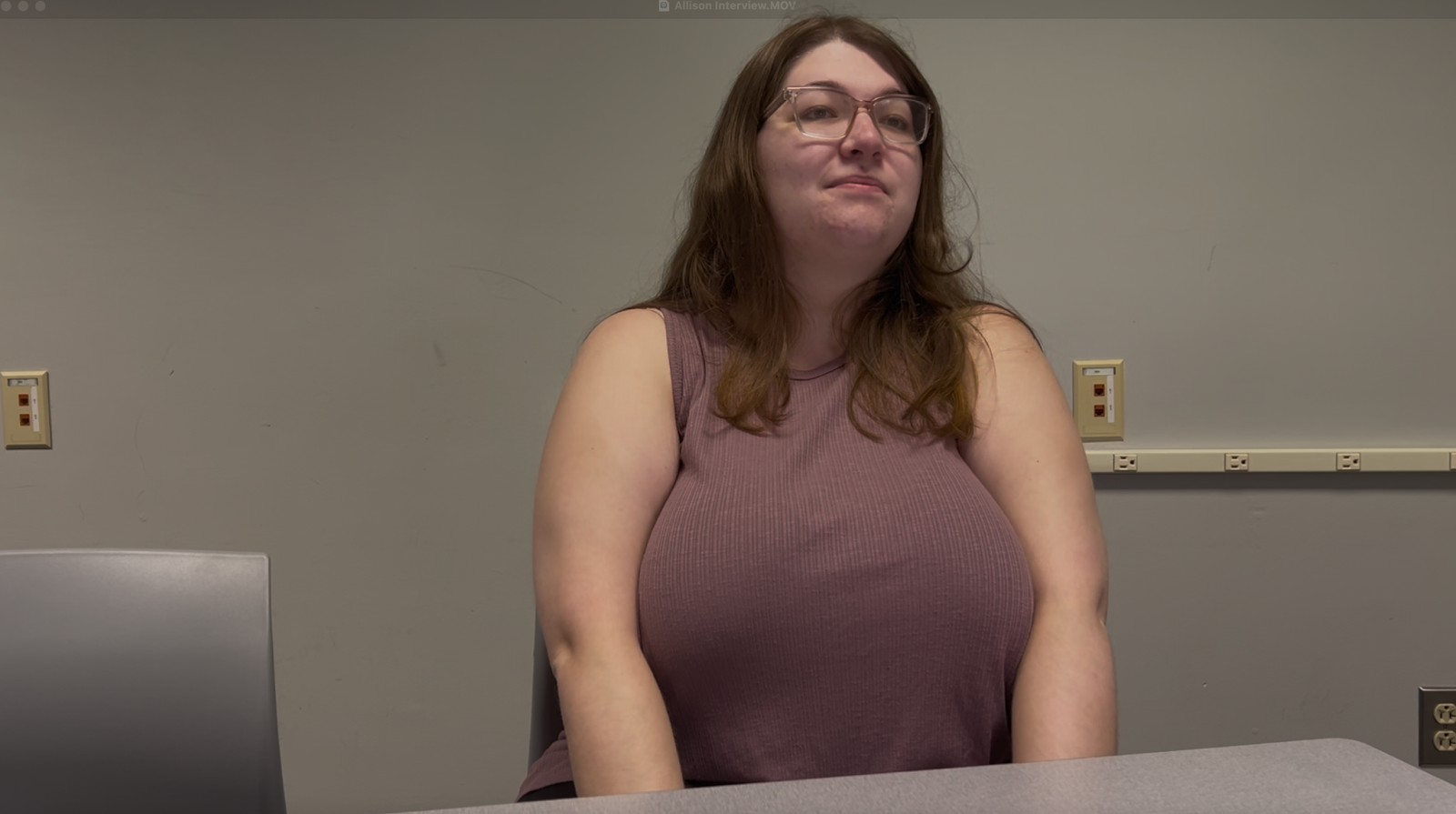
Photo: Allison Mawn, journalism student at the University of Georgia and Editor-in-Chief of the Red & Black, talking about her experience covering three trauma stories in one year.
That same year, at Emory University, Madison Olivier was covering a pro-Palestine protest for her student newsroom when police fired rubber bullets into the crowd. Police fired tear gas, grabbed and tased students. Her fellow student sang to calm herself as police carried her by her arms and legs to a police car. Olivier would later be tear-gassed as she covered the protests 24/7 for almost a week.
“I think there’s nothing that will really prepare you for it,” Olivier said. “You can sit there and talk about it in class all day, but actually doing it is different.”

Photo: Allison Olivier, psychology student at Emory University and previous Editor-in-Chief of the Emory Wheel, talking about her experience with trauma reporting.
Stories about trauma can be hard to consume and harder to cover. Especially young journalists eager to prove themselves and the trauma is happening in a journalist’s backyard. It’s important for them to be properly prepared, not just physically but mentally.
“So I think what we need to do as we’re training young journalists and as we’re covering stories is have that same mindset,” said psychologist Kimina Lyall of the Dart Center of Journalism and Trauma. “‘I need to put on my flak jacket.’”
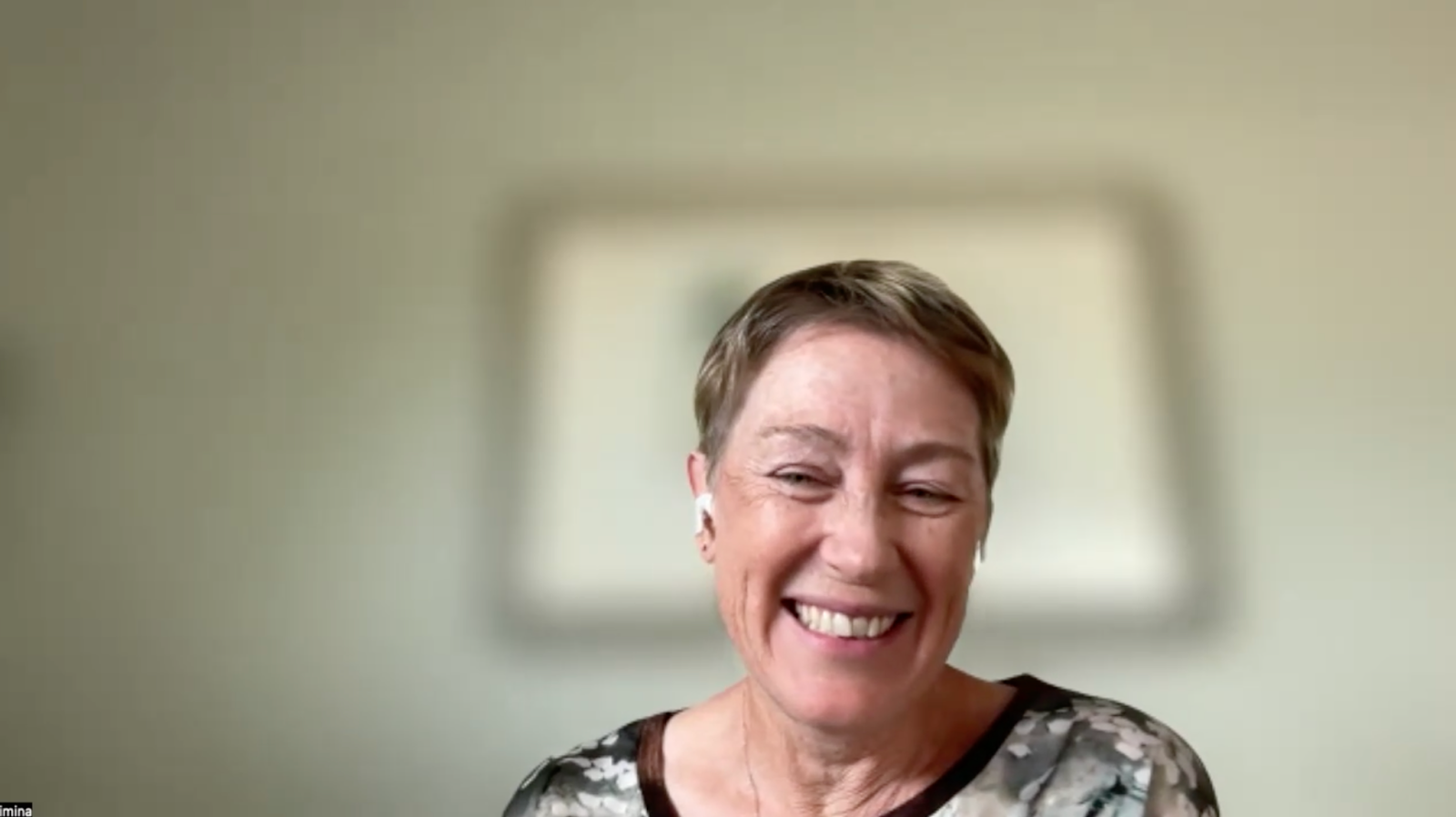
Photo: Kimina Lyall of the Dart Center for Journalism and Trauma
Their “flack jackets” can look like community and peer support and mechanisms for rest. Because they were not a part of the story, one might say they experienced secondary trauma; but Lyall says that because they witnessed/experienced it, they experienced direct trauma. This can cause a physiological response to trauma – fight or flight.
Mawn experienced memory loss in response to her coverage of Riley’s murder.
“Parts of it fade in and out,” Mawn said, “There’s some moments from that couple of days that I remember so vividly, and then some parts that I don’t. Which I do know is a sign of trauma. And that’s fine. I’ve accepted that.”
Lyall stresses having ways to rest and turn off “work mode.”
“I always advise journalists [to] have something in your pocket that will activate your saliva,” she said. “Have something that is going to activate what we call your rest and digest system, which is the opposite of the flight-fight system.”
Resting in the middle of such stories may seem impossible, but Lyall says that taking nanoseconds to tell yourself that you are safe can help.
“And I actually think that in order to have a sustainable career, you have to learn really early on about switching off,” Lyall said. “So this is a discipline that most older journalists can’t institute because they’ve done 20 years without instituting it. But young journalists can.”
How trauma affects the reporting
These stories require a lot of these journalists’ attention and effort. Five months after Apalachee, Mawn was still coming to the realization of just how big the story was. And she still feels protective of any follow-ups on the Riley story.
“If I was going to talk to Allison, I would talk to her about that. How do you make it not your story?” Lyall said. “It’s that person’s story, their family story, the community’s story, but it’s not yours.”
Because most top stories are trauma stories, Lyall believes training is essential. For Riley’s story, Mawn felt prepared in that she knew how to look at police reports and email the school.
“But [I was] also extremely unprepared,” Mawn said, “When you join your college newspaper, you expect maybe there might be some big news. You never expect anything quite like that to happen.”
Mawn held to her strict standards on empathetic reporting which she learned at university.
“These people have no obligation to you,” Mawn said. “You need to remember that we’re people first, journalists second.”
Lyall brought up an important distinction about consenting to interviews/coverage that speaks to the nuance of the last part of the journalist’s mantra – “do your job, do it well, do no harm.”
“It sounds like semantics, but I actually think it’s an important distinction,” Lyall said. “[Journalists] can be sensitive and empathic and all of those things, absolutely, but as soon as I make a decision about what that other person wants, I’m depriving them of their power. And that is what trauma does. Takes away someone’s power.”
Covering these stories for days is not ideal but can be unavoidable. Lyall stresses going back to the basics of connecting with friends, eating and sleeping to counter the physiological impacts of trauma.
Olivier was a psychology major and all of her training came from her newsroom. Journalists are bound to have opinions about these hot topic stories, but Olivier’s years of news training about objectivity and coworker support helped her with bias and opinion. She didn’t post her opinions and Mawn let her source’s opinions write themselves in her follow-up coverage of how the Latino community was affected by Riley’s murderer being Latino.
Olivier’s experience as a psychology major and working for an LGTBQ suicide hotline gave her tools to interview with empathy, approach tough conversations with unhappy readers and support her fellow editor’s mental health.
Hope for the future
Despite the complex ways trauma affects young journalists, Lyall believes that most journalists handle trauma well and don’t need psychological treatment unless they present long-term symptoms.
“I worry about the 90 percent of journalists, who go through their whole careers covering really tough stories and doing it really well, getting the message that there’s something wrong with them if they’re not falling apart,” Lyall said.
Mawn and Olivier both leaned on their communities to support their mental health and their reporting.
“Peer support – it’s the thing,” Lyall said. “So the fact that they’ve already instinctively started to do that is amazing as well.”
From former editors taking an hour-long bus ride to help —
“Having them is what really, really helped,” Olivier said. “Because if I had to do it by myself, without as many editors, it would not have happened. Just having that community.”
…to seeing a community come together —
“You’re seeing this community fresh in mourning, but you’re also seeing the way that people come together in the wake of tragedy, which I think is a very beautiful thing, and is one of the things I do love — not love about covering these stories — but it makes it bearable.”
Olivier loves journalism and believes it will be a part of her future. Mawn still tears up when she sees what she calls “the shot” of hundreds of students gathered in mourning and solidarity.


 Moriah's Portfolio